Dive better
Further training after the Open Water Diver, exactly the way that suits you
What's next after the OWD?
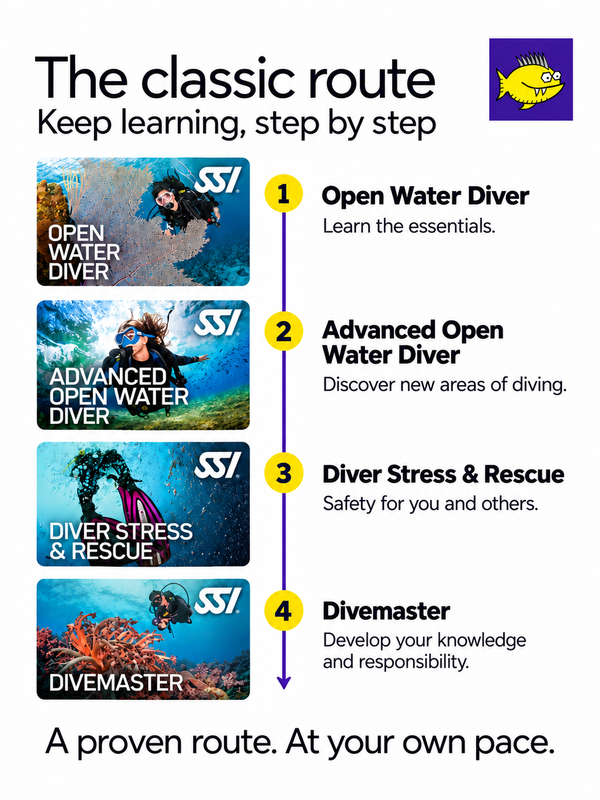
Of course, the best thing about diving is being comfortable underwater and taking a good look around. You enjoy it even more, and more relaxed, when you know what you're doing. Want to go deeper, find your way without a guide, be able to help others or understand everything you see underwater? There are two ways to get there: the classic route via the Advanced Adventurer and Stress & Rescue, maybe all the way to Divemaster. Or you pick exactly the specialties that interest you and shape your own path.
It doesn't matter where you did your OWD: we recognise certifications from any reputable training agency.
At a glance
| Course | Scope | Price |
|---|---|---|
| Advanced Adventurer | 5 dives and SSI materials | €399 |
| Deep Diver | 3 dives and SSI materials | €259 |
| Other specialties | 2 dives and SSI materials | €199 |
| REAL Advanced Package | 4 Specialties in 10 dives | €749 |
| Stress & Rescue | 5 dives and SSI materials | €409 |
Try it all: the AOWD
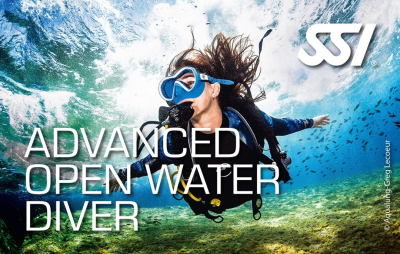
You've got your licence, but you're still a bit short on experience and don't quite know what you most want to experience underwater.
That's exactly what the Advanced Open Water Diver is for, a course designed to introduce you to different areas of diving.
Of course, being able to find your way underwater is essential. That's why you'll do a navigation dive on the course and learn some techniques for orienting yourself underwater with and without a compass.
And because the sea doesn't end at 18 m, a deep dive to 30 m extends your knowledge and skills so you can plan and carry out safe dives at that depth too.
You choose the other three dives entirely as you like.
Unlike the OWD, there's no final exam on this course. But it doesn't work without any theory at all, so your materials cover all topics, and you can always read up on things you didn't end up doing on the course. You read up, we explain a little more than what's in the book, and then it's into the water.
With just five fun dives you have a new certification and can dive to 30 m.
SSI specialties: learn what interests you
Divers are all different. Some want to marvel at every little fish, others just want to hover. Some are drawn ever deeper, others feel most at home in the sunlit shallows. That's why you choose your favourite topics yourself, and we train you in exactly those.
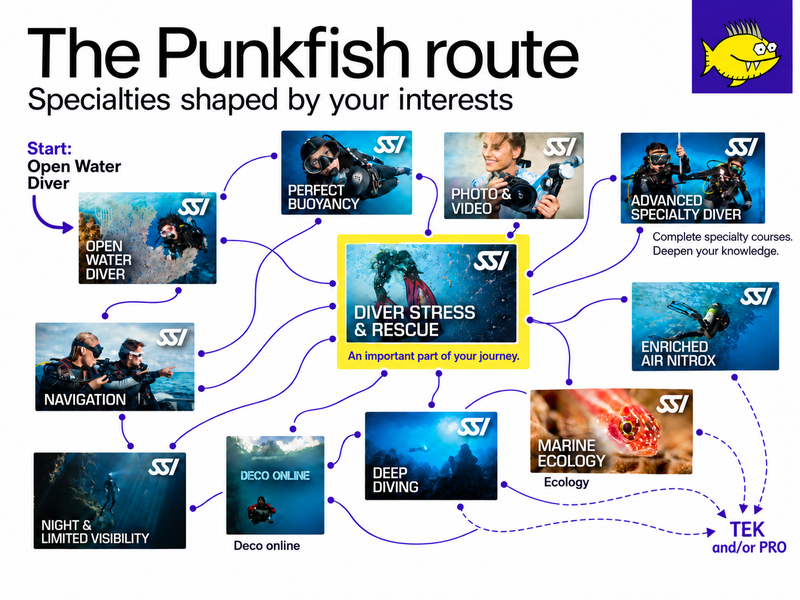
The classics
Better buoyancy
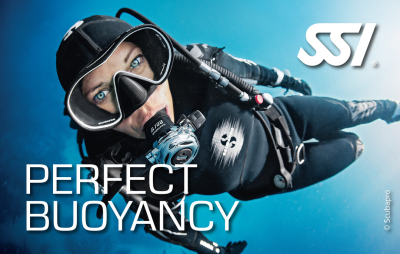
When you look behind you, is there still a trail in the sand? Do you find it hard to stay still in the water, and are there lots of particles floating in your photos? Then it's worth focusing a bit on your buoyancy. We show you how to manage with less weight, breathe more calmly, dive more smoothly and hold your position in the water. Along the way, your air consumption usually drops too. The course also works well as a refresher before you take on more demanding dives.
Navigation
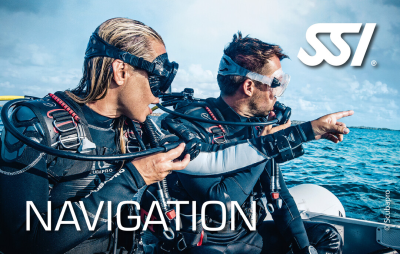
If the guide suddenly disappeared, be honest: would you find your way back to the exit? If you want to dive independently with your buddy, you need to be able to navigate. You practise using a compass and natural navigation by the landscape, and in the end you find your own way.
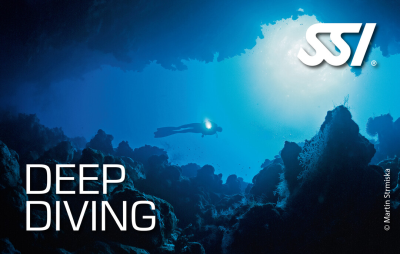
Deep diving
At night all cats are grey, but the fish are even more colourful than by day. When the sun goes down, the sea wakes up: octopuses venture out of their holes, moray eels go hunting, thousands of tiny shrimps scuttle over the rocks and the anemones bloom like meadows of flowers. Night diving isn't difficult, but it needs a few techniques that you'll learn here.
Night diving
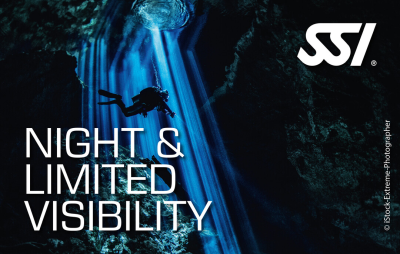
At night all cats are grey, but the fish are even more colourful than by day. When the sun goes down, the sea wakes up: octopuses venture out of their holes, moray eels go hunting, thousands of tiny shrimps scuttle over the rocks and the anemones bloom like meadows of flowers. Night diving isn't difficult, but it needs a few techniques that you'll learn here.
The special ones
Handling the sea
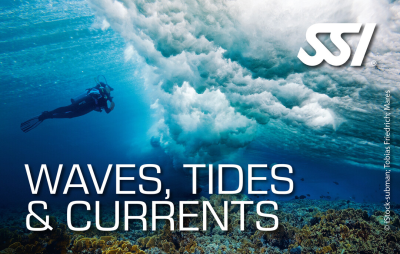
Why are we especially careful at full moon? How do you get into the water through surf, and how do you move efficiently in a current? You learn to read wind forecasts and tide tables and draw the right conclusions. And we dive in lively conditions so you get a feel for what's still possible, and which signs mean it's better to call the dive off.
Take better photos

If storing your dives in your head isn't enough, you capture them. So that the pictures turn out the way you like to look at them, we practise showing simple things to their best advantage. A bit of image editing and video cutting is included too.
Dry suit diving
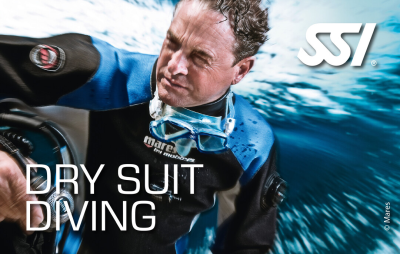
If you get cold easily, sooner or later there's no way around a dry suit. With one you can dive all year round, in cooler destinations too, and you don't come out of the water shivering.
Bought a dry suit and don't know how to handle it yet? With a few exercises it's easy.
Boat diving
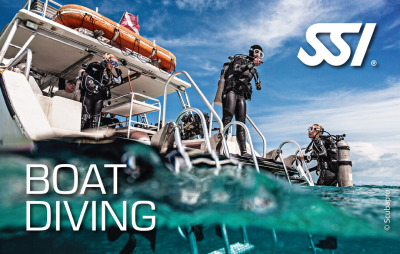
Although most of our dives are from the shore, every now and then we get the chance to head out by boat to the new lava of Tajogaite. With the boat diving specialty you learn what to look out for on dives from a boat. And if you also holiday elsewhere, you can put it to use on our annual deco theory safari in the Red Sea.
Dive theory from the Punkfish Academy
Enriched Air Nitrox
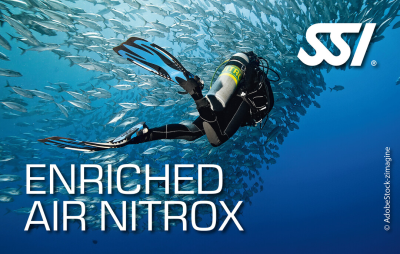
Still plenty of air in your cylinder when your no-deco time runs out, or want to do lots of dives in a row? With nitrox, more oxygen and less nitrogen, you get longer no-deco times. Because oxygen limits the depth, you learn what effects it has, how to analyse your gas and how to plan nitrox dives with tables and a computer. You can do the course completely online.
Science of Diving
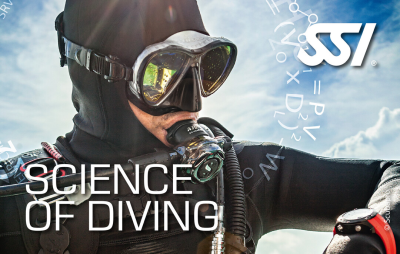
Found the OWD theory too easy, and really want to know what happens in your body underwater and how tides and waves work? Science of Diving contains the complete dive theory up to professional level. Also completely online, with lots of extra material.
Altitude Diving
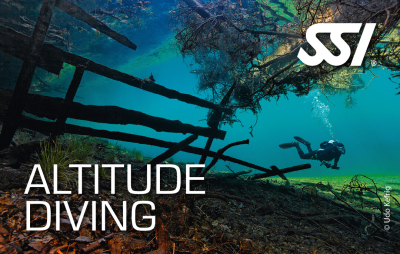
Even though we dive in the sea, altitude matters: the island's highest mountain is 2,500 m high. What should you bear in mind when diving if you want to go even higher afterwards? And why is there really no need to worry about the 700 m in Fuencaliente?
Deco theory online
At Punkfish Diving, the authors of the standard German-language book on decompression theory are part of the team. This in-depth knowledge is now also summed up in an online course. With lots of interactive tools, entertaining and in the Punkfish quality you know.
Almost tech
Decompression Diving
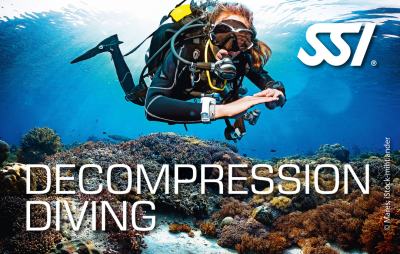
Does your no-deco time always run out just when it's at its best? Want to do a little deco in a safe and controlled way, without having to go all the way into technical diving?
Then the Decompression Diver is the right course for you. Your normal equipment is extended by a stage cylinder, and you learn to plan dives to 40 m with 15 minutes of deco on one deco gas. You stay at up to 40% oxygen, so your knowledge from the nitrox course is enough.
Prerequisites: 16 years, Deep, Nitrox, 24 dives
Duration: 4 dives
Price: €399
Independent Diving
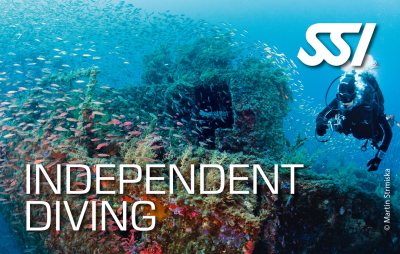
Diving is usually best with a buddy. Still, there are moments when you have to manage on your own: when your buddy is taking photos, when you're paying more attention to subjects than to them, or when you simply want some time to yourself. On this course we make sure you always carry redundant equipment, and we practise solving problems underwater on your own. That way you can rely above all on yourself and, if necessary, make solo dives as safe as possible. On the first dive we check whether your skills are up to it.
Prerequisites: 18 years, Advanced, Stress & Rescue, experience in navigation, deep and night diving, at least 75 dives
Duration: 4 dives
Price: €379
Act before you have to react: Stress & Rescue
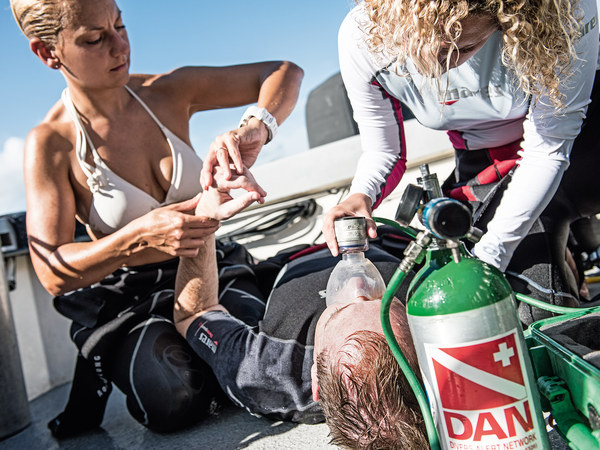
Once you can handle tricky situations yourself, it's time to be able to help others. In Stress & Rescue you learn how to avoid problems and what to do if they happen anyway. First you brush up on self-rescue, then you take on more difficult scenarios.
We start with everyday diving: what can go wrong with the equipment? Which tricks save the dive, and when do I have to abort? How do I deal with it when someone else isn't feeling well? And why would I rather cancel even the most beautiful dive than do it against my better judgement? Stepping in at the right moment with a little help not only saves the dive, but can prevent an accident. And because accidents can still happen, we also train rescue techniques: recovering a diver, towing, deciding whether in-water rescue breathing makes sense. Everyone breaks a sweat here.
Although the course is very serious, there's more laughter on it than on any other. Don't get it? Then try it.
At a glance
- Duration: 5 dives
- Prerequisites: Open Water Diver, first aid course no older than 2 years
- Minimum age: 12 years (up to 14 as a junior certification)
- Included with us: O2 Provider
- Price: €409, including SSI materials
You might also like
Refresher
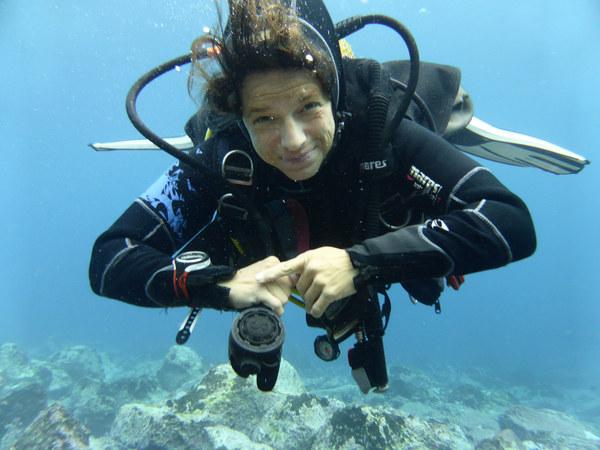
Not dived for a while? We'll refresh your skills.
Tech courses
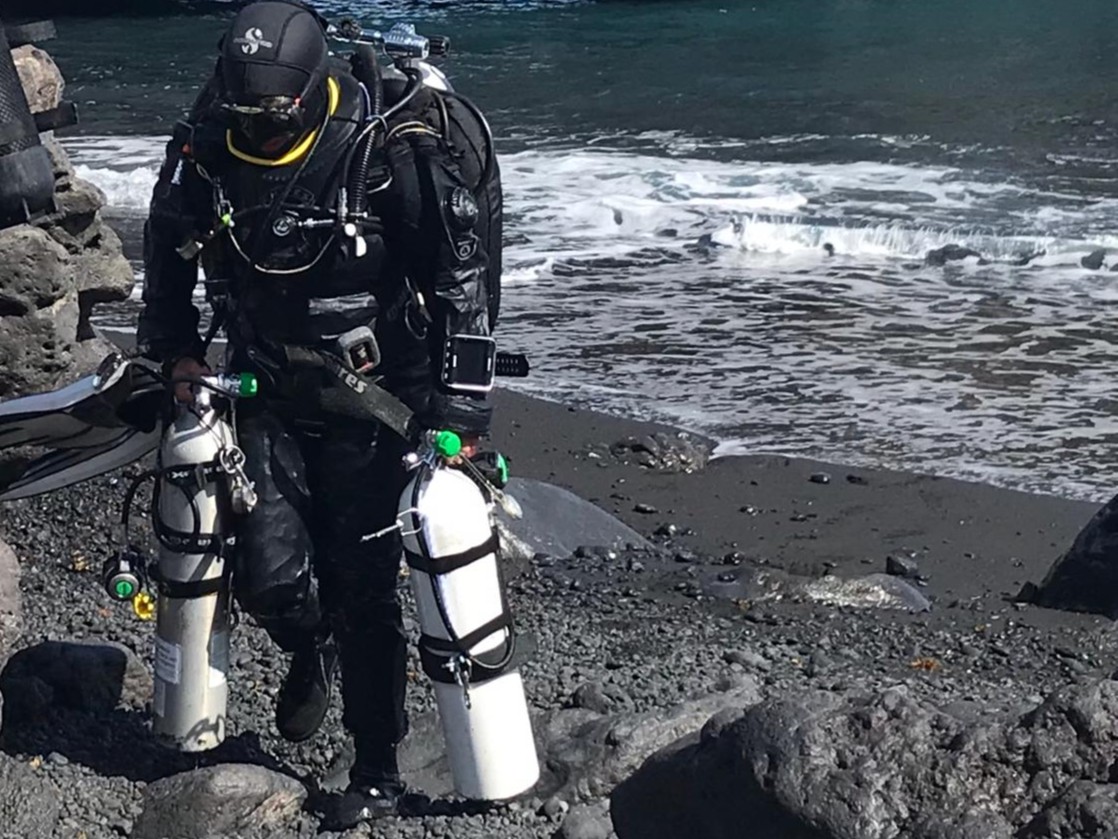
Longer, deeper, more gases: technical diving on La Palma
Become a dive pro
Divemaster, instructor, crossover: your path to Dive Pro
How do I get in the water?
Easy: just let us know you want to dive, by WhatsApp, phone, email or directly online. We take care of the rest.


