The best dive sites on La Palma
Lava, black coral and arches, all around the island
Where are the most beautiful dive sites?
The southern tip of the island is fascinating and an absolute must. Best known here is Malpique, with its much-photographed 39 crosses, an underwater memorial, but our "house reef" has so much more to offer. A few kilometres further on are Las Cabras and the little beach of Los Molinos, and at El Faro there are shallow dives with an easy entry.
On the west side we dive around the marine reserve, mainly at La Bombilla and Puerto Naos. As a special experience, we take the boat to the fresh lava of Tajogaite or to the arches of Charco Verde. The east coast offers even more variety with La Salemera, La Bajita and Los Cancajos.
Which sites we go to, we decide fairly spontaneously depending on the weather and our mood. That way we always show you whatever is best right now.
The wild south
Malpique: crosses, tower and arch
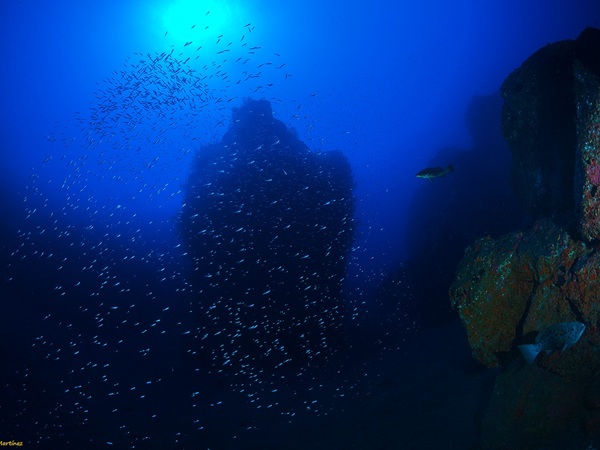
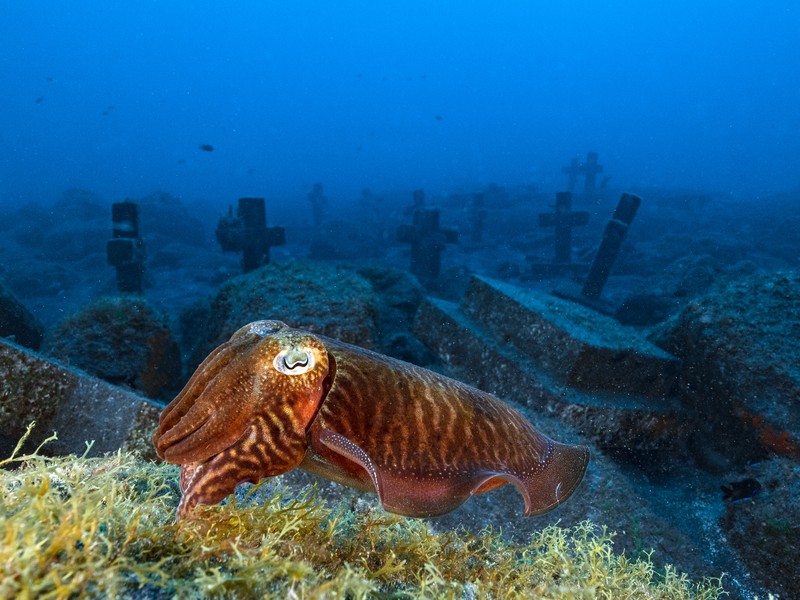
Much photographed and much dived is the famous underwater memorial at Malpique: 39 concrete crosses commemorating crusaders who were slaughtered by pirates in wild times. Legend has it that a ship of Jesuit monks was under way, heavily laden with loot. The pirates intercepted it, took the loot and sank the boat with all the monks. All except one: the cook. He got to cook for them from then on.
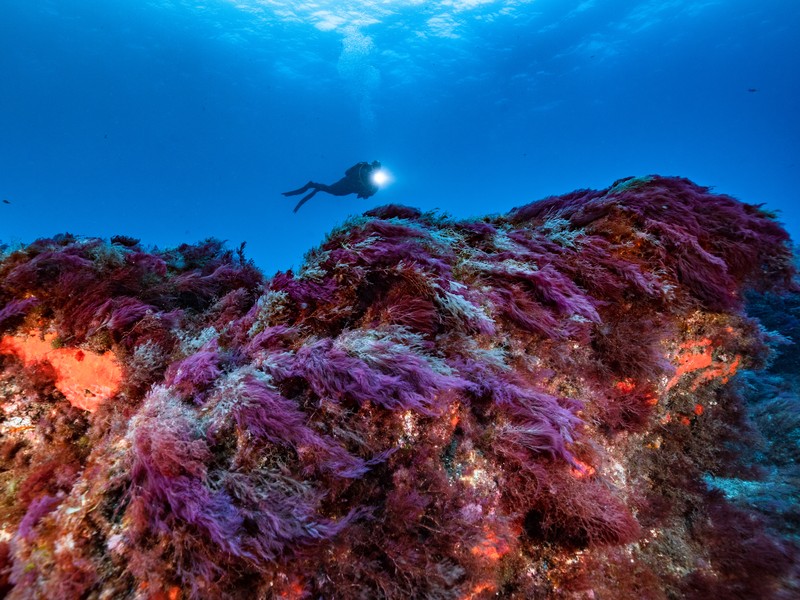
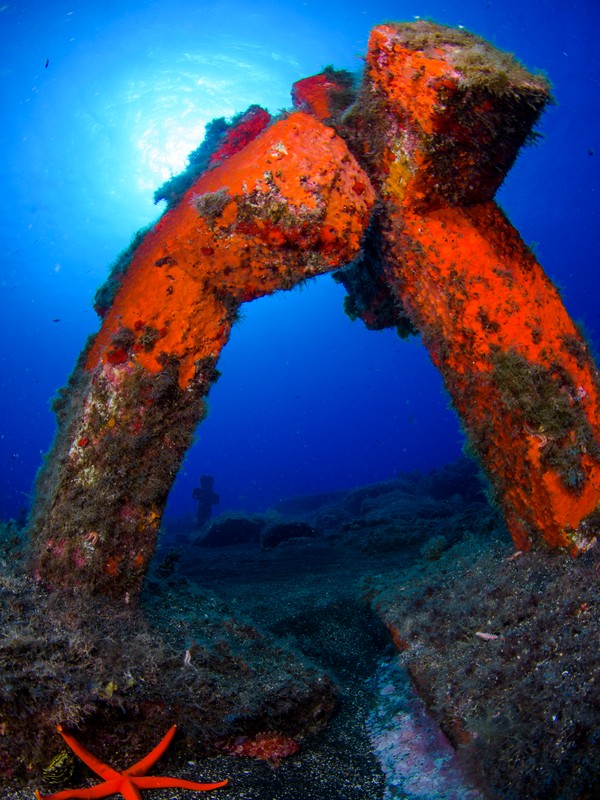
Far more spectacular than the crosses, though, is everything else the site has to offer. On the inner reef we admire all kinds of moray eels, head for a tower covered in black coral, or plunge into the depths through the arch on the outer reef. In the other direction the landscape slopes down more gently, with a swim-through at about 35 metres. Shallower are the stone crosses and a beautiful canyon. And perhaps the best of all: the very shallow area with loads of fish and entertaining rock formations, where try dives or deco stops fly by.
Las Cabras: a dream of young lava
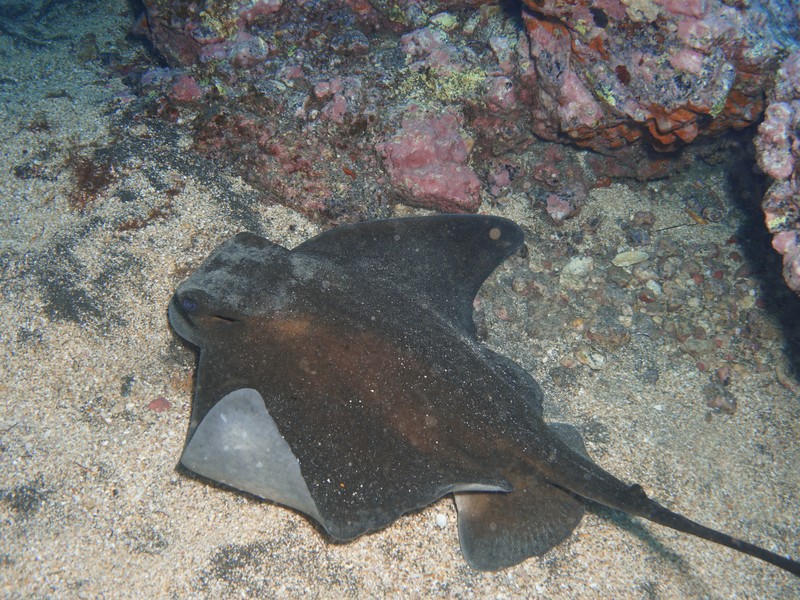
Even the drive there is an experience: nowhere else on the island will you find such a sprawling volcanic landscape, almost like the moon. This patch of land and the dive site were created in the 1971 eruption. At high tide the bay offers a sheltered entry, and as soon as you leave it, it gets spectacular. Several lava tongues run down into the deep blue, visibility is usually excellent, and rays often glide past. One of the lava tongues is densely covered in black coral from 35 metres. The ascent on a platform at about 10 metres is great fun thanks to an arch and small caves.
Los Molinos
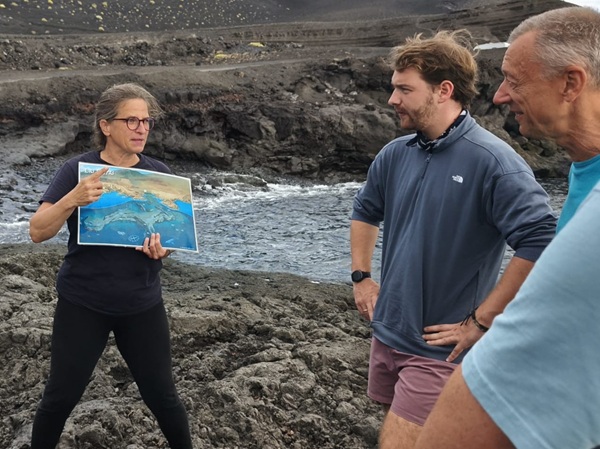
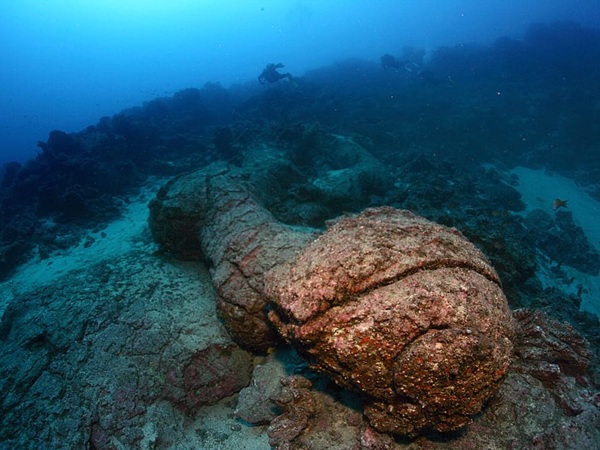
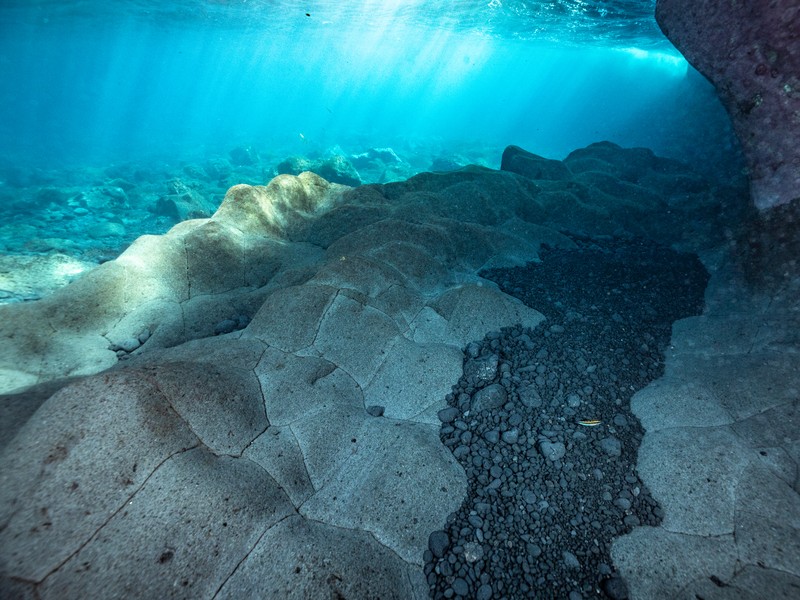
Just before Las Cabras lies Los Molinos, a tiny cove in the shadow of the wind turbines. From this hidden beach you reach a dive area that shows the island's full variety. After a few metres a panoramic view opens up into the depths, and some surprise or other almost always passes by. The pronounced pillow lava, with its bizarre formations, invites you to imagine figures. Unfortunately the entry is often rough and wavy, so the site can only rarely be dived. But when it can, we're all the happier.
El Faro
Right next to the salt pans and the lighthouse of Fuencaliente is the Playa del Faro. From the beach you walk easily into a rocky bay full of life. Beginners already see a lot in the shallows; more experienced divers swim further out to a cave and down into the depths. The island's southernmost point can be exposed to strong currents, so we are always careful here.
The west
La Bombilla: Latin charm in the west
In the pretty little fishing village of La Bombilla, a large sandy area leads to an extensive lava landscape, a deep wall and a shallow, winding lava maze with small caves and swim-throughs. A good spot especially in summer, when a ladder makes the entry easy.
Puerto Naos
On the reef at Puerto Naos, a wall drops from 10 to over 40 metres. There's plenty to see at every depth: black coral below, masses of moray eels and trumpetfish in the shallows, lava tongues and crazy rock formations. Every dive is an experience.
By boat to the new volcano
The Tajogaite volcano caused terrible damage on the island in 2021. But it also created a new dive site: where the lava flowed into the sea, we now watch a completely new piece of underwater landscape develop, with a few more animals living there each time. The site can only be reached by boat. We go when enough divers come together for this special day trip.
Charco Verde
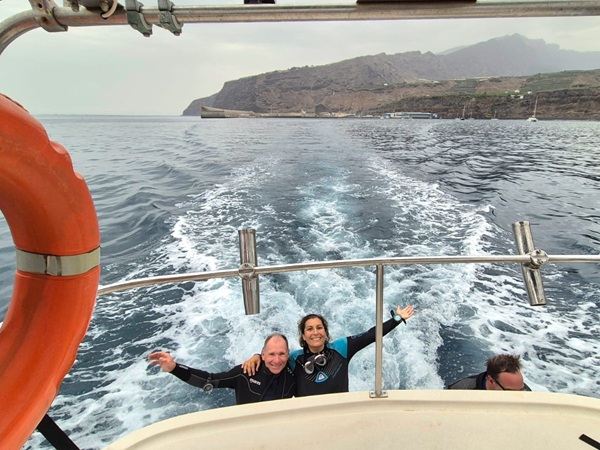
Right by the nature reserve on the west side is Charco Verde, best reached by boat: a perfect second dive before or after the new lava. Several impressive arches lie at a moderate 14 to 18 metres. Here alone you can spend the whole dive looking for slipper lobsters and shrimps, and play with thousands of ornate wrasse above. Behind them, of course, it goes properly deeper too.
The east
La Salemera: the golden sponge paradise
The east coast is also home to the lighthouse of La Salemera, next to it a pretty beach and one of the island's best-known kioskos. People meet here at weekends to eat fish, and after diving you can easily stay a little longer. But it's worth a visit underwater too: bright sand, a wall full of golden sponges and some arches in very shallow water. The ladder entry needs good conditions, but when the sea is calm we love coming here.
La Bajita and El Fraile
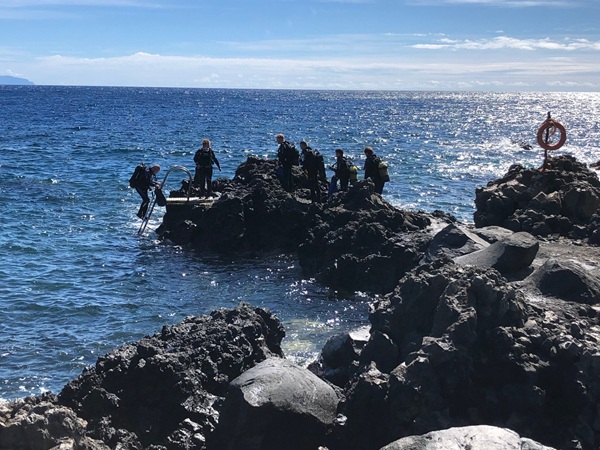
La Bajita is in a small village by the airport. Via a fishermen's ramp or a ladder you enter an area of large sandy patches that rays like to visit. There's always something to discover between the scattered rock formations. Very close by is another entry, El Fraile: from there we glide through an enchanted lava landscape back into the bay of La Bajita.
Los Cancajos
From the different entry points we do several dives here without anything repeating. Always lovely is the fish-rich area around "the Claw", a striking lava rock at about 20 metres. At almost 30 metres lies the "mini reef" at the aircraft wing, which nearly always holds a surprise. In the shallows, a tour through the canyon and to the colourfully overgrown fairy-tale forest beckons. To the right is the chapel cave, a shallow, wide lava tunnel where you can even surface, full of tiny shrimps, with crabs scuttling across the ceiling. Further out, lava flows with fields of red gorgonians and a forest of black coral run down into the depths. And in the sheltered bay behind the breakwaters we watch fish at our leisure and run courses.
Interactive dive site map
Underwater on La Palma: gallery
Where do you want to dive?
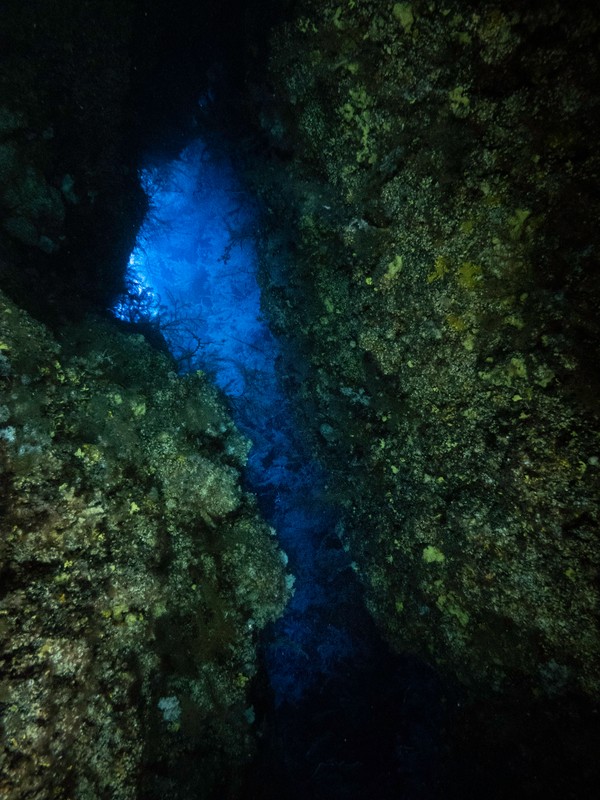
Which sites would you like to dive? We depend on the weather, but we still try to make as many wishes come true as possible.


